
Boat Life · Cape Coral
The Boat Ramp Is Full: What to Do Instead
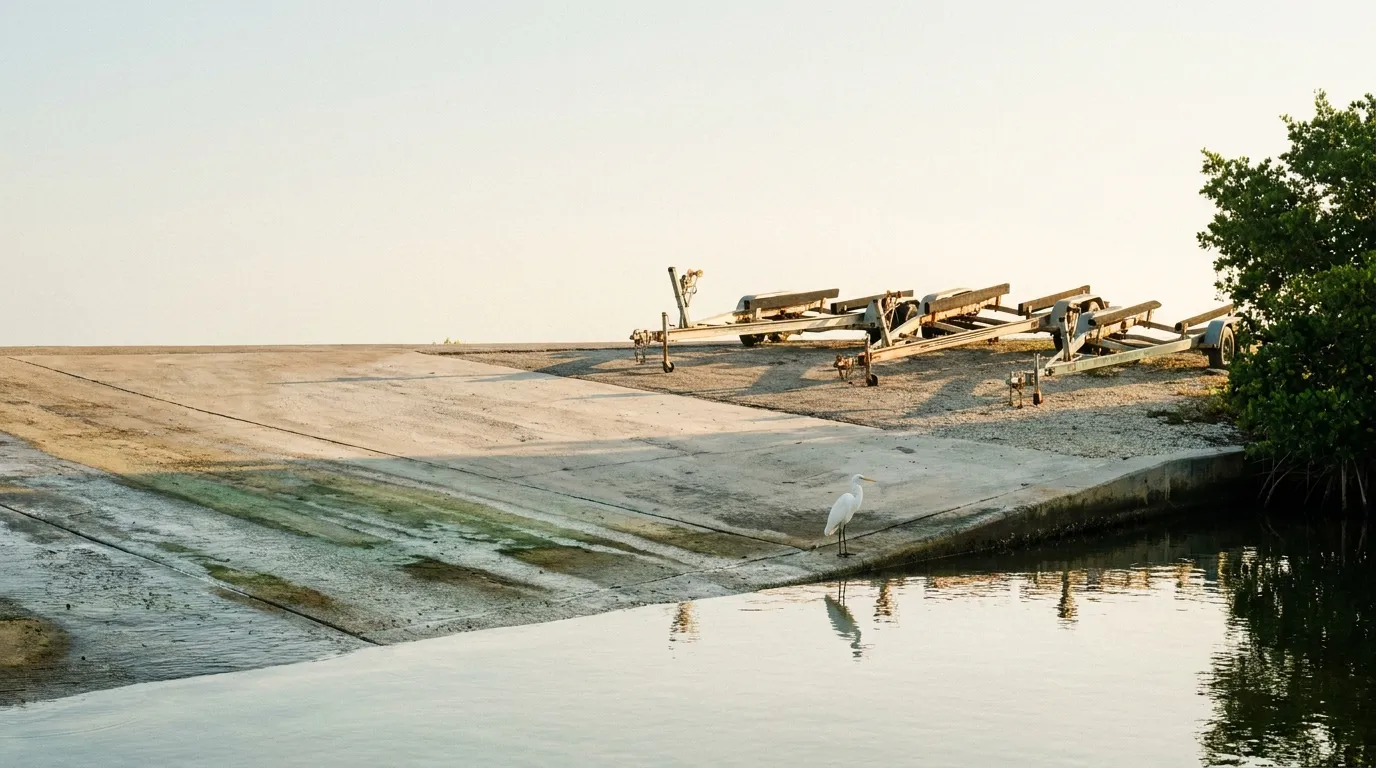
You loaded the cooler at seven. You are at the ramp by nine. There are eleven trailers ahead of you, the parking lot is a game of Tetris that already ended, and the family in the truck behind you is very quietly not speaking. This happens in Cape Coral more than anyone tells you. Here is what to actually do about it.
Why the ramp fills up the way it does
Cape Coral has more than 400 miles of canals, and a limited number of public ramps that connect trailered boats to them. On a Saturday between roughly 8:30 and 10:30 a.m., every one of those ramps sees a rush — locals, snowbirds, and visitors all trying to launch inside the same two-hour window.
The bottleneck is almost never the ramp itself. It is the parking. Truck-and-trailer spots fill first, and when they are gone, the next trailer sits in the lane, and the lane backs up into the road.
The mistake is treating the ramp as the plan. The ramp is one step in the plan, and it is the step most likely to fail.
The problem is not the boat. It is the morning.
If you are standing at a full ramp reading this on your phone, skip to the next section. If you are reading this the night before, the fix is upstream. Three things move the odds:
- Launch before 7:30 a.m. or after 11:00 a.m. The early launch gets you the flat water and the parking. The late launch gets you the people who came back in for lunch and left their spot.
- Pick a weekday over a weekend if the trip allows it. Tuesday and Wednesday are quieter at every public ramp in the city.
- Have a second ramp in mind before you leave the driveway. Not a vague idea. An address, a route, and a rough drive time.
None of that helps if you are already sitting in line. So.
You are at the ramp and it is full. Now what?
You have four honest options. Pick one in the next five minutes rather than idling for forty.
1. Drop the passengers, then park somewhere else
If one adult can launch and hold the boat at the courtesy dock, the rest of the crew can wait on foot while the driver takes the truck to legal off-site parking and walks or rideshares back. This turns a parking problem into a walking problem, which is a much smaller problem. Confirm off-site parking is legal before you leave the truck — a ticket is not a rounding error.
2. Drive to the second ramp
This is why you picked one last night. A twenty-minute drive to a quieter ramp beats a forty-minute wait followed by a launch inside a scrum. The mental math people get wrong: the wait feels like it is almost over for the entire wait.
3. Change the shape of the day
The boat day was the goal. The water day is the goal underneath the goal. Those are not the same thing, and the second one has more solutions.
- Kayaks or paddleboards launched off a private dock, seawall, or a small hand-launch spot — no trailer, no ramp, no parking lot.
- A booked boat charter or guided fishing trip. Someone else already solved the launching problem hours ago.
- A pontoon rental from an operator who launches for you. You show up at the dock; the boat is in the water.
None of these are consolation prizes. They are the version of the day where nobody is arguing at 9:47 a.m.
4. Postpone by four hours
Go get breakfast. Come back at 1 p.m. The morning crowd is heading in as the afternoon crowd is heading out, and there is a real window where the lot breathes. You lose the sunrise. You keep the day.
The launch itself, when your turn comes
Once you are on the ramp, the etiquette is simple, and it is what makes the line move for the person behind you.
- Rig in the staging area, not on the ramp. Straps off, plug in, gear loaded, cooler aboard — all before you back down.
- Back down, launch, pull forward, park. Do not tie up the ramp lane while somebody walks to the truck.
- Use the courtesy dock briefly. It is a handoff point, not a hangout.
- At the end of the day, do the same thing in reverse. Load the boat, drive up and off the ramp, then unload the coolers in the parking lot.
If you have never done it, watch two launches from the staging area before it is your turn. Ten minutes of observation saves the whole afternoon.
What to ask before you rent a boat, if you are going that route
If a full ramp on your first morning has convinced you that trailering is not the trip you want, renting is reasonable. Ask the operator:
- Do you launch the boat, or do I? (The answer you want is we do.)
- Where is the boat picked up and dropped off — a private dock, a marina slip, or a public ramp?
- What is the fuel policy, and where is fuel taken on?
- What is the deposit, and what triggers it? Prop damage from a shallow bar is the one people forget.
The right rental for a Cape Coral canal day is the one where you never touch a ramp. That is the whole point.
The trip that avoids the problem entirely
The quietest boat day in Cape Coral is the one that starts at a private dock behind the house you are staying in. No trailer, no ramp, no parking lot, no line. Two of our three homes are on saltwater canals with private docks — one of them includes the boat on a lift in the backyard. When guests ask what makes a Cape Coral trip feel unhurried, that is usually the answer: the boat is already in the water when you wake up.
If you are still in the planning stage and the ramp math is starting to feel like the wrong hobby, come see the three homes from the dock. We will tell you which one fits the trip you are actually taking, and which one does not.
Where these facts come from
- City of Cape Coral, on the canal system length (400+ miles).
- Direct owner observation at Cape Coral public ramps, weekends and weekdays, 2024–2025.
Last verified: September 2026. Ramp conditions, parking rules and rental operator policies change — confirm with the City of Cape Coral and the individual operator before your trip.